It is cyber-secure, cloud-independent, calculates like the human brain (neuromorphic), is based on 7 nm technology and is the first AI chip ever developed at a university in the EU. Two and a half years after Prof. Hussam Amrouch presented the concept in the journal Nature, the chip is now complete. ‘An important step towards technological self-determination in Europe,’ says TUM President Thomas Hofmann.
[read more]
RobCo, a Munich-based robotics start-up founded by three former robotics students of the Technical University of Munich (TUM) from the Chair of Prof. Alois C. Knoll, has raised USD 100 million to further expand its AI-driven automation solutions for industrial production.
[read more]
An underwater robot that collects trash, an AI chip that is independent of the cloud, and a brain chip that enables paralyzed people to move again: these are the ten best contributions to robotics from the last year of research, sorted by their reach in the national and international media landscape.
[read more]
A research team at the Technical University of Munich (TUM), together with partners from the mobility and chip sectors, has developed a new software architecture that could reshape how autonomous vehicles operate.
[read more]
Researchers at the Technical University of Munich (TUM) have introduced a new method demonstrating how precisely controlled mechanical impulses can guide stem cell development.
[read more]
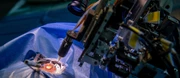
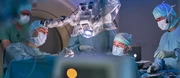
GRATA is the name of the research project that the Federal Ministry of Research, Technology and Space (BMFTR) is supporting with €1.91 million over the next three years. The project, coordinated by MIRMI member Ali Nasseri, professor at TUM Clinic, focuses on the development of a modular, AI-supported platform for robot-assisted surgery. The aim of the research project is to support medical staff in using robotic applications safely and competently.
[read more]
A milestone for neurotechnology and robotics: A team at the University Hospital of the Technical University of Munich (TUM) has, for the first time in Europe, implanted a brain-computer interface in a patient with paralysis. The goal is to use artificial intelligence and robotics to open up new ways for more independent interaction with the environment.
[read more]
The invention by the start-up QTPIE, co-founded by TUM professor Achim Lilienthal, has made it onto the list of ‘Best Innovations’ published by the US magazine TIME. A modern smartphone on a car's dashboard monitors the road and the driver, calculating how well and safely they are driving: the Motor Vehicle Administration in the US state of Virginia is already preparing for its practical implementation.
[read more]
The Technical University of Munich (TUM) is consolidating its expertise in AI chip design with the launch of MACHT-AI – a center that brings research, education, and industry collaboration closer than ever before.
[read more]
Can robots tackle one of the ocean’s most persistent challenges – underwater waste? Researchers at the Technical University of Munich (TUM) believe they can. As part of the EU project SEACLEAR 2.0, the team has developed an autonomous diving robot capable of detecting, classifying, and collecting marine litter entirely on its own.
[read more]
Receive our featured stories, news, events, and videos in your inbox every month, subscribe here!