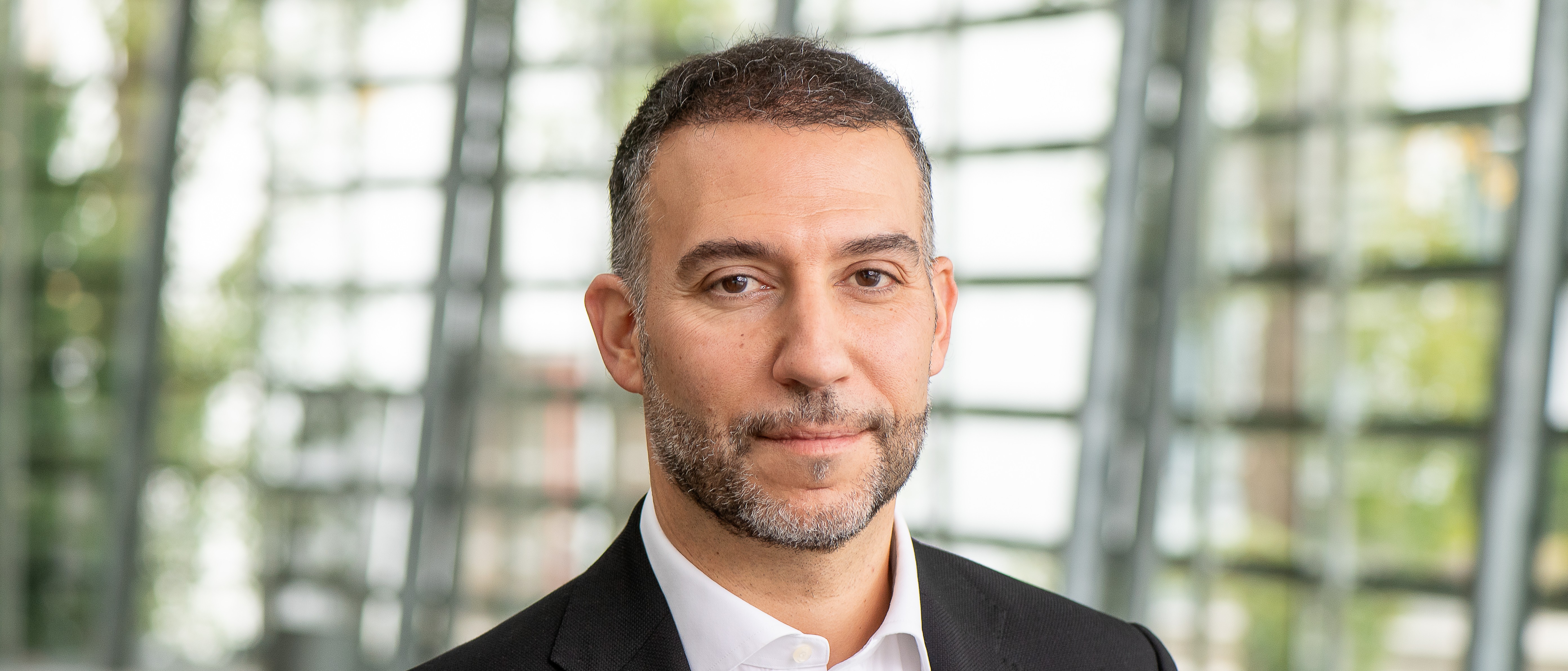
“In the future, we will focus on both civilian and military uses of developments, in other words defense and security applications,” says Prof. Lorenzo Masia, Executive Director of (TUM MIRMI). “With dual-use applications, we use our innovations for the benefit of society by supporting people in their everyday lives and at work, while helping to improve people's security and the country’s defense.”
Civilian use as the starting point for all developments
Researchers at TUM are already developing various robotics and AI systems with potential uses in both areas of application, including advances in the following fields:
- Exoskeletons and exosuits: These wearable systems support rehabilitation and enable workers and carers to carry heavier loads. However, they can also help soldiers cover longer distances and save energy.
- Prosthetics: Modern prosthetics, including brain-controlled technology, enable amputees and people disabled by illness or accident to regain some of their natural mobility. However, they can restore the quality of life of wounded soldiers.
- Drones: Unmanned aerial vehicles such as drones are capable of delivering medicines, inspecting wind turbines and supporting search and rescue operations after natural disasters. In emergency and defense situations, they are suitable for reconnaissance flights, border controls and emergency operations in regions that are too dangerous for humans.
- AI chips for local applications: Neuromorphic AI chips, modelled on the human brain and carried onboard by intelligent robotic systems, will process data securely and quickly at the point of origin. Because they do not use the cloud, they are suitable not only for protecting personal data in fitness watches and electronic devices, for example, but also for security-critical applications, even under extreme conditions.
- Autonomous mobility: Mobile assistant robots on legs or wheels are used in factories or hospitals, where they sort and retrieve goods or help sick or elderly people to get up or eat. In defense applications, their abilities will be in demand for scouting dangerous areas, carrying heavy equipment or defusing mines.
Other areas of research are also interesting for dual-use applications. However, a great deal of development work is still needed in such fields as brain-machine interfaces and humanoid robots.
Airbus, Hensoldt, and DLR as partners
The TUM MIRMI defense and safety initiative is supported by strong partners from industry, government and research – such as the aerospace group Airbus and the sensor specialist Hensoldt. Both companies are represented on the industrial advisory board, providing valuable insights into critical security challenges. Another research partner is the German Aerospace Centre (DLR), which brings special expertise in robotics and autonomous systems to the table. Prof. Lorenzo Masia: “As one of Europe's leading robotics institutes, TUM MIRMI combines cutting-edge research with practical requirements and ensures that Munich and Germany remain at the forefront of global innovation at a time when technology and security go hand in hand.”