When Robots Learn to Grasp Like Humans: TUM’s Digital Robot Judge
NEWS |
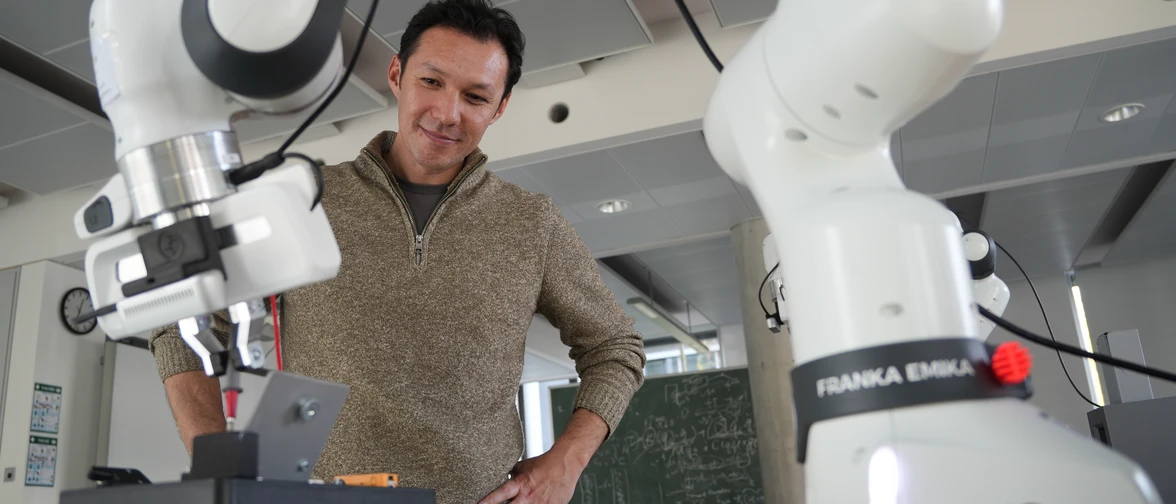
On the ground floor of the TUM MIRMI building in Georg-Brauchle-Ring, Peter So leans over a black task board while a robotic works through precise movements, trying to remove toxic batteries from end-of-life electronic devices. Next to him, students work on their own boards, each on a different use case but all with the same goal: to teach robots how to assemble and disassemble delicate electronic components. These skills come naturally to humans but are still difficult for robots. So describes the core challenge as follows: ““Factory work is evolving, yet robots still need new skills to adapt to unforeseen scenarios to keep up. This is especially apparent in the circular economy.” This is exactly where his work comes in. So not only teaches future robotics engineers, but he has also developed a tool to benchmark progress in robot skill development in the field with the potential to reshape the international competition landscape: the Digital Robot Judge, or DR.J.
The Digital Robot Judge
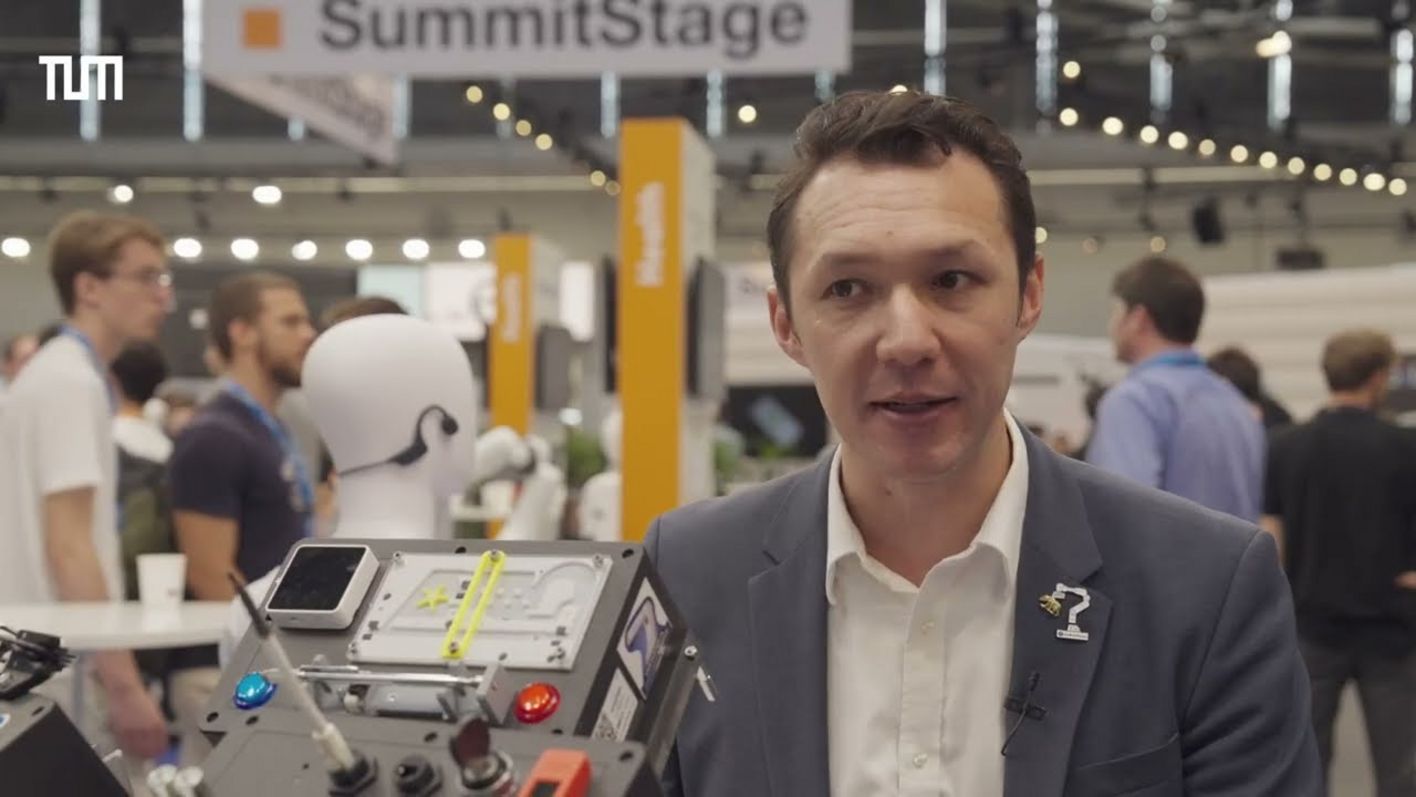
To create fair and globally comparable conditions, So developed a laptop-sized electronic task board with integrated sensors to measure task performance, enabling direct comparison between human and robot capabilities. His idea was to bundle all the sensing technology into a device: “We try to jam all these sensors into a small package that we can ship in the mail.” The boards register when a button is pressed, a plug is inserted, or a battery case is opened, and they send this data in real time to a web dashboard. There, teams, juries, and researchers can explore detailed performance traces in real time. This level of transparency is rare in robotics. Videos, So says, remain important, but they never tell the full story: “Most videos are highly produced and don’t show how many attempts it takes to actually produce those results.” DR.J, by contrast, makes it possible to objectively compare many attempts, errors, improvements, and learning curves across labs worldwide.
Competitions, Challenges, and Vision
The Robothon Grand Challenge is an international robotics competition tied to the automatica trade show, founded by So. In 2025, teams tested the latest task board design with a touchscreen and magnetic pen shaped tool to assess text reading, light signal recognition, and object manipulation. In tasks like cable winding, robots even outperformed humans, while in other areas they still have room for improvement. Transparency and reproducibility remain central principles for Peter So: all design files, circuits, and software are open-sourced. His vision is clear: “I would love to see our electronic task boards used in every robotic curriculum to provide a common reference for comparing real-world robot performances around the world.” And as he guides the robotic hand into position once more in the lab, it becomes evident how much these small, measurable advances will shape the future of robotics.