

The task was quite open-ended: What could be improved in everyday surgical practice? Which processes are not as optimal as they could be? Medical staff are often busy with other things and have become accustomed to existing processes over the years. Students, however, look at them with an unbiased eye.
Project weeks at MITI in January 2025: 70 applicants for 12 available places
This happened at the beginning of the year at MITI, whose researchers organised the project weeks with the Chair of Ergonomics (LfE) and the Medical Autonomy and Precision Surgery lab (MAPS). Nearly 70 students applied to be part of one of the four three-person working groups. ‘Practical experience sometimes gets neglected at university, which is why there was such a rush,’ explains doctoral student Luca Wegener, who developed the programme for the project week with postgraduate students Max Bergholz and Angelo Henriques and supervised it throughout the week.
Procedure: 3 days of preparation
The first three days were spent preparing for the start of the actual project week. The basic idea is to appeal to students from various degree programmes, such as electrical engineering, mechanical engineering, computer science, and medicine, so the groups are as interdisciplinary as possible. However, this also means that their different backgrounds had to be brought into line regarding content. This included a visit to the operating theatre: over two days, they had the opportunity not only to watch operations, but also to talk to the staff there, understand processes, and see where robots are used. With this input in mind, the twelve participants started the weekend before developing a viable and meaningful solution began the following week.
One week to implement an idea
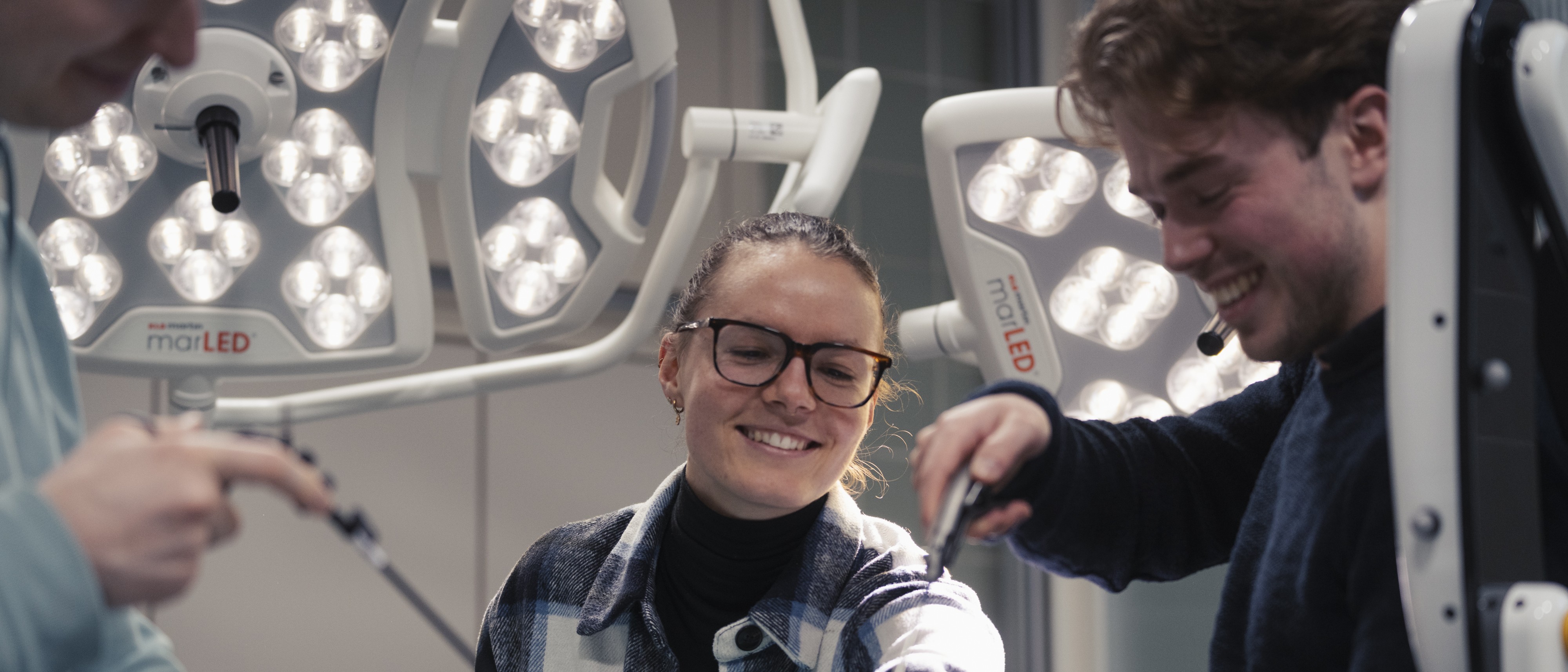
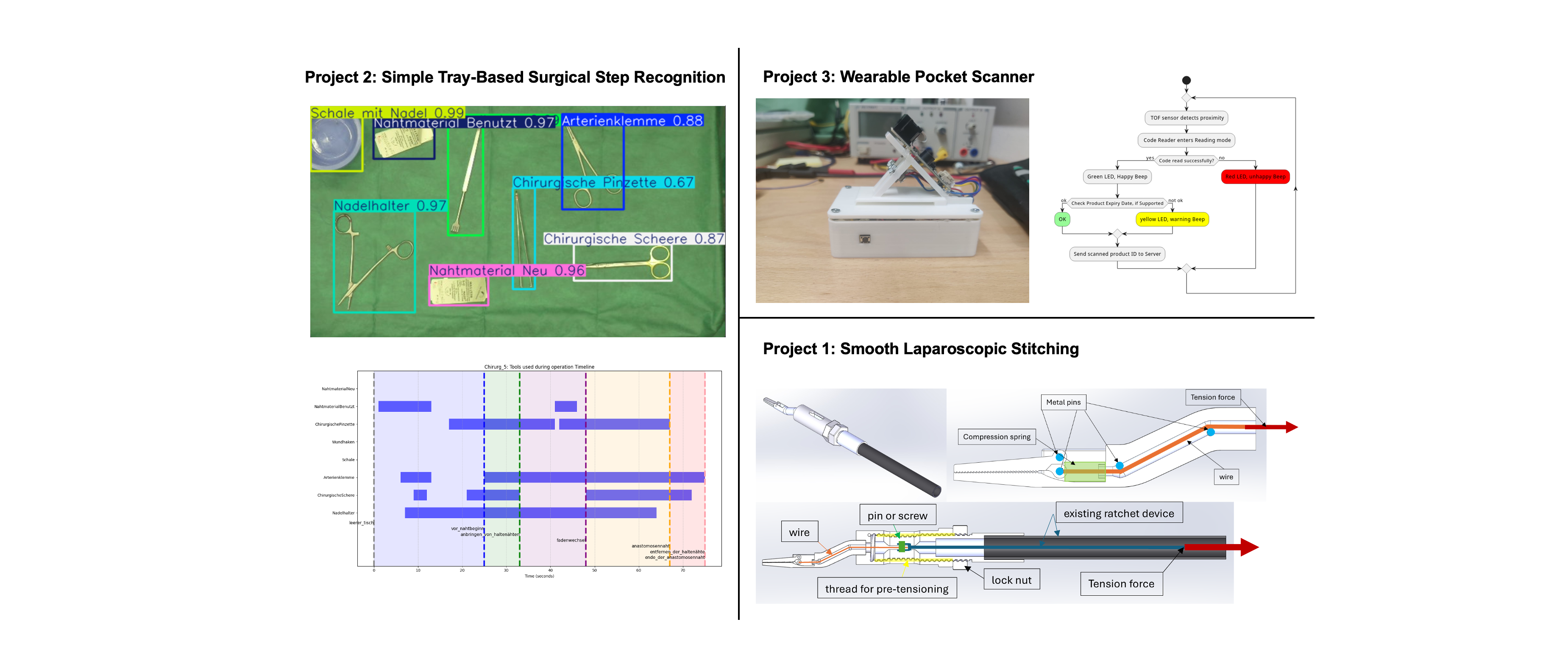
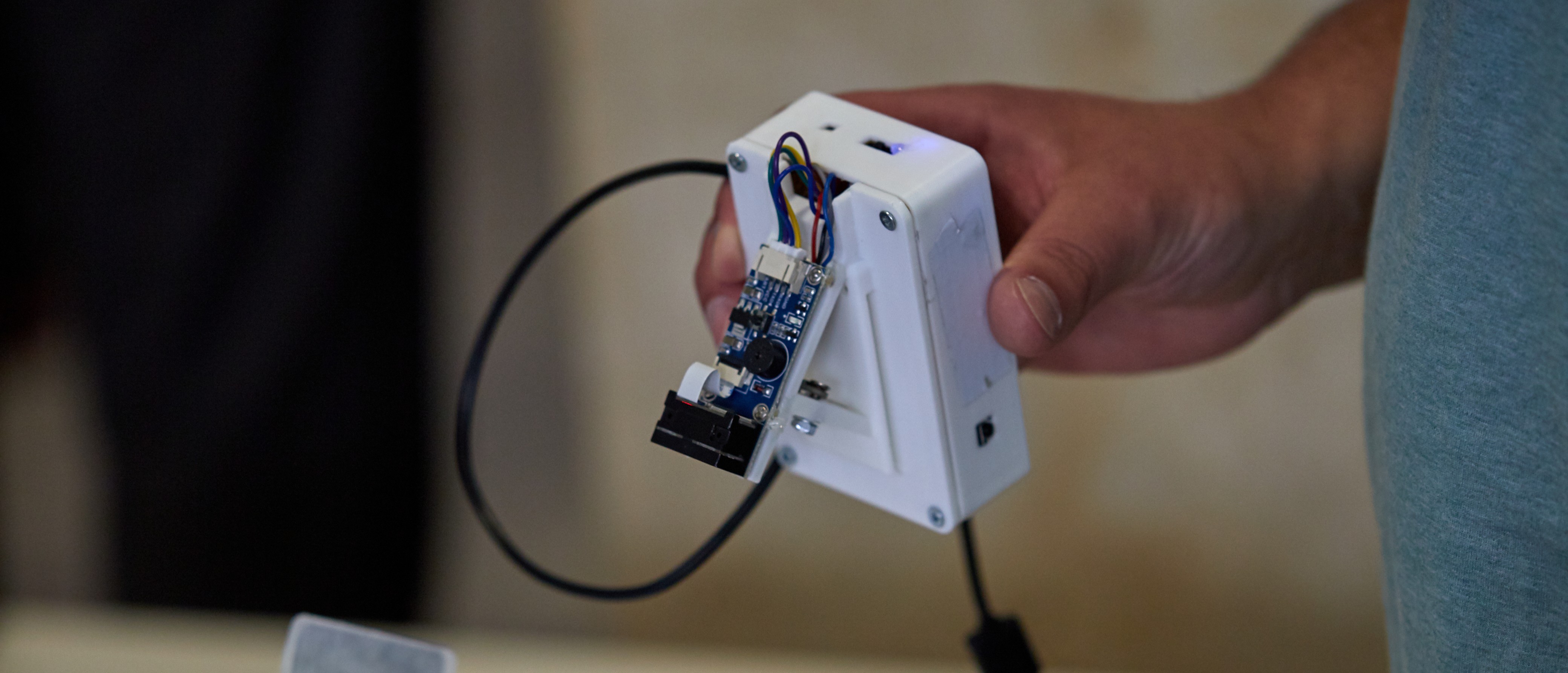
An experimental operating theatre, technical equipment such as 3D printers and sensors in a workshop, and medical professionals were available to provide ‘low-threshold feedback’. This resulted in a wide variety of approaches. A new instrument that can follow curves when suturing after abdominal surgery. A scanner for used disposable products in the operating theatre. Operating theatre lamps that cast fewer shadows. Cameras that recognise workflows in the operating theatre. The scanner became the ‘hit’ of the last project week, and the topic is even being further developed in a student research project. The idea is to attach a scanner to the breast pocket of so-called runners, who have to fetch surgical materials during an operation. Instead of typing the disposable product's material numbers into the computer, this work is now done by a scanner. What's more, this information flows into the corresponding hospital system. This saves time.
Next project week in planning
The next project week is scheduled for the end of 2025, which students can count towards their studies.
The new topic: Applied Surgineering
This project introduces current challenges in medical technology within a real clinical environment and equips students with the skills to independently solve complex technical problems. Through clinical observations in the operating room, students gain first-hand insights into surgical procedures based on real interventions. In accompanying workshops, they are introduced to human-centered design principles in an interdisciplinary setting.
Following this, students work in small groups to independently develop and evaluate technical solution concepts. Throughout the process, they are coached by an interdisciplinary team of experts on development strategies. Comprehensive materials and a practice-oriented environment at the TUM University Hospital are available to support their work.
At the end of the course, students present their developed solutions, critically assess them, and reflect on the overall development process.
Contact: Max Bergholz
For students of the TUM School of Engineering and Design, the TUM School of Computation, Information and Technology, or the TUM School of Medicine & Health from the fourth Bachelor’s semester onward
TUMonline module no.: ED160044
ECTS: 4
Period: 19 November 2025 to 1 December 2025
TUM is offering 35 project weeks in the 2025/26 winter semester.
Further information about all TUM project weeks:
https://www.tum.de/en/studies/degree-programs/key-skill-programs/project-weeks